When one car hits another, each person’s body is thrown toward the impact, then away from it. This is whiplash. Even at slow speeds, the force puts stress and strain on the spine. This is especially true for the neck. The weight of the head stretches and damages muscles and ligaments. It may pull spinal bones out of line. The bones that protect your spinal cord (vertebrae) can be forced out of position. Disks are the spine's shock absorbers. They can bulge, rupture, or wear down. Nerves can get pinched or inflamed. And muscles and ligaments can be stretched or torn.
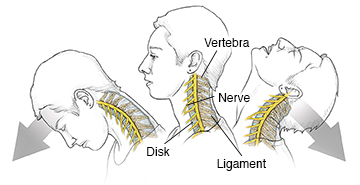
Symptoms of whiplash
A wide array of symptoms can follow an auto accident. Symptoms may appear right away. Or they may be delayed for several days. Symptoms may include:
-
Pain, especially in your neck, shoulder, arm, or lower back
-
Arm or leg numbness
-
Stiffness
-
Headache
-
Dizziness
Treating whiplash
You may be asked to do one or more of the following:
-
Ice the injured area for 24 to 48 hours. Do this for
20 minutes. Repeat5 times a day. -
After 48 hours, put moist heat on the injured area for
20 minutes. Repeat5 times a day. -
Wear a cervical (neck) collar for as long as recommended.
-
Take nonsteroidal anti-inflammatory drugs (NSAIDs) or muscle relaxants as directed by your healthcare provider.
-
Call your healthcare provider if you have numbness or weakness in your limbs. This can be a sign of nerve injury.
Online Medical Reviewer: Anne Fetterman RN BSN
Online Medical Reviewer: Heather M Trevino BSN RNC
Online Medical Reviewer: Mahammad Juber MD
Date Last Reviewed: 04/01/2024
© 2000-2026 The StayWell Company, LLC. All rights reserved. This information is not intended as a substitute for professional medical care. Always follow your healthcare professional's instructions.